.NET

Welcome to our .NET Backend Development hub — your ultimate resource for mastering the backend of modern web applications using Microsoft’s powerful .NET ecosystem. Whether you’re a beginner just starting with .NET or an experienced developer looking to sharpen your skills, this category provides comprehensive tutorials, step-by-step guides, and real-world examples to help you build scalable and high-performance applications.

.NET is a versatile framework for building web applications, APIs, and enterprise software. In this category, we cover everything from the foundational .NET Framework and .NET Core to the latest .NET 8 features, helping you understand the differences, advantages, and use cases for each version. You’ll learn how to develop robust backend systems, handle data efficiently, and implement security best practices like JWT authentication and role-based access control.

Our tutorials focus on key .NET concepts such as ASP.NET Core Web API, MVC architecture, dependency injection, repository pattern, Entity Framework Core, and LINQ. Each guide is designed to simplify complex topics with clear explanations, code examples, and practical implementation tips. From building CRUD operations and optimizing application performance to implementing caching and middleware, we cover everything you need to become a proficient backend developer.

Additionally, we provide hands-on tutorials on integrating your .NET backend with frontend frameworks, deploying applications to Azure, and using advanced features to create full-stack solutions. By exploring this category, you’ll gain a deep understanding of backend development principles, improve application performance, and learn best practices that are widely used in professional software development.

Whether your goal is to build secure APIs, scalable enterprise solutions, or full-stack applications with .NET and modern frontend frameworks, our .NET Backend Development tutorials will equip you with the skills and confidence to succeed. Start exploring our guides today and transform your ideas into high-quality, production-ready applications.

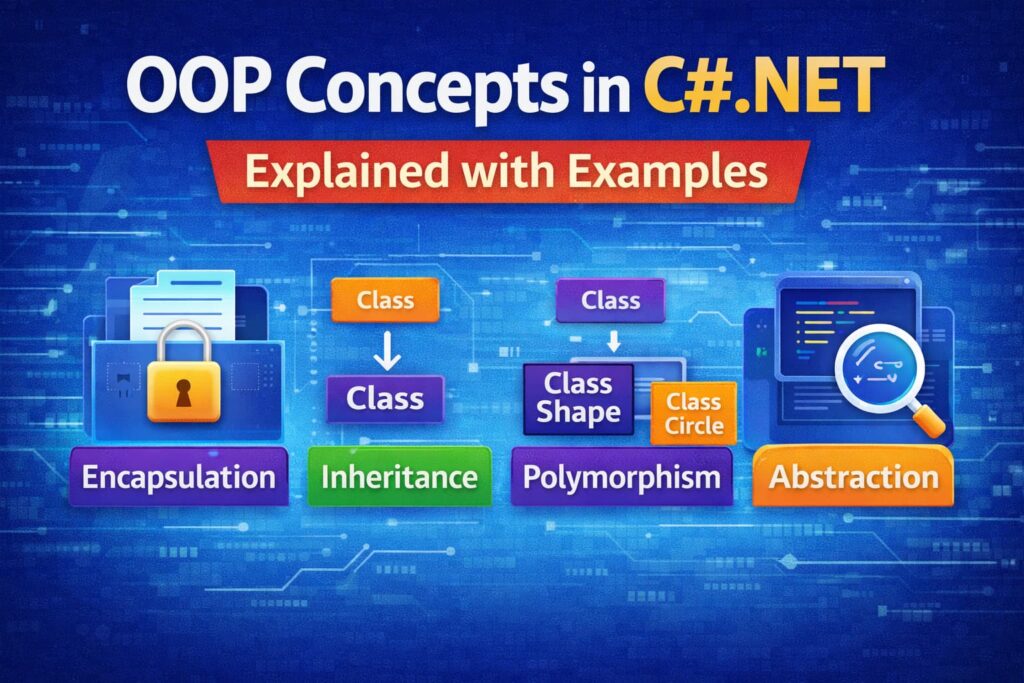
OOP concepts in C# .NET explained with examples including encapsulation inheritance polymorphism and abstraction

OOP Concepts in C# .NET Explained with Examples

When you start learning modern programming, one concept shows up again and again Object-Oriented Programming (OOP). If you’re working with C# and .NET, understanding OOP isn’t optional, it’s essential. In simple terms, OOP helps you write code that feels closer to how we think about real-world things. Instead of dealing with scattered functions and variables, […]

OOP Concepts in C# .NET Explained with Examples Read More »

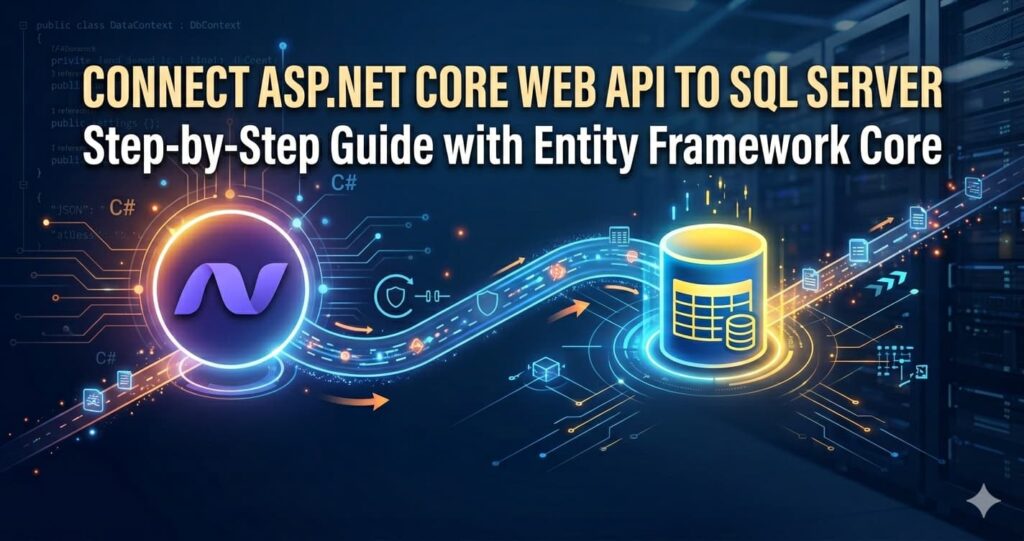
How to connect ASP.NET Core Web API to SQL Server using Entity Framework Core step by step

How to Connect ASP.NET Core Web API to SQL Server Using Entity Framework Core (Step-by-Step Guide)

In modern backend development, building APIs that interact with databases is essential. One of the most widely used combinations is ASP.NET Core Web API to SQL Server with Entity Framework Core. ASP.NET Core Web API allows developers to build REST APIs, while Microsoft SQL Server is used to store and manage data efficiently. To simplify

How to Connect ASP.NET Core Web API to SQL Server Using Entity Framework Core (Step-by-Step Guide) Read More »

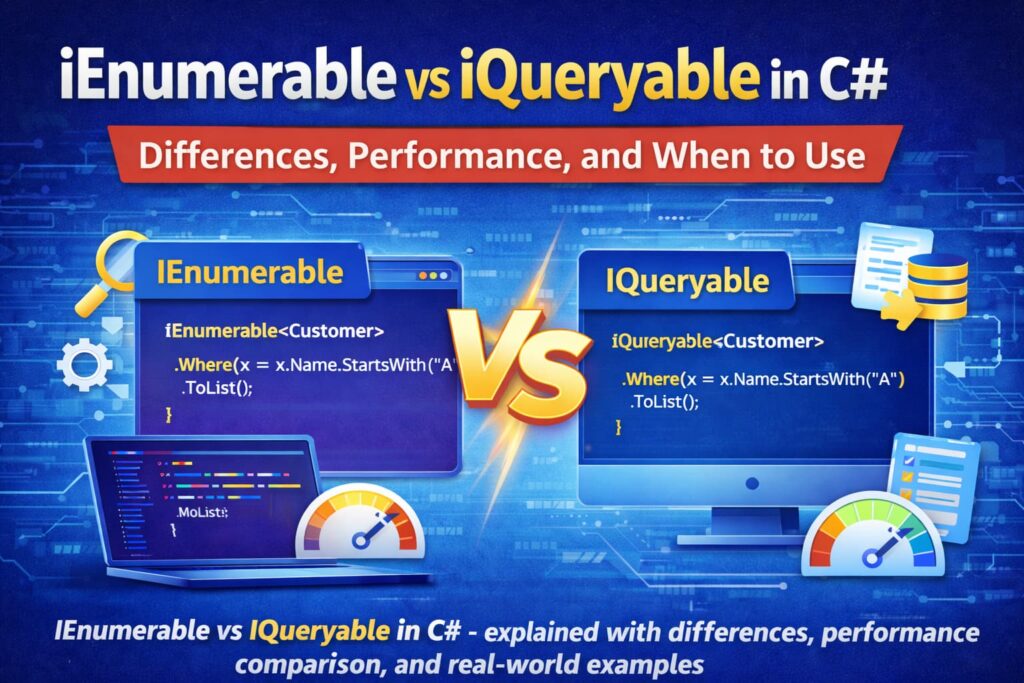
IEnumerable vs IQueryable in C# comparison showing differences, performance, and when to use with examples

IEnumerable vs IQueryable in C# with Examples: Differences, Performance, and When to Use

When working with data in C#, especially with LINQ or Entity Framework Core, you will frequently encounter two interfaces that often cause confusion: IEnumerable vs IQueryable. At first glance, they might look similar, but choosing the wrong one can have a big impact on your application’s performance. Both IEnumerable and IQueryable are interfaces used for

IEnumerable vs IQueryable in C# with Examples: Differences, Performance, and When to Use Read More »

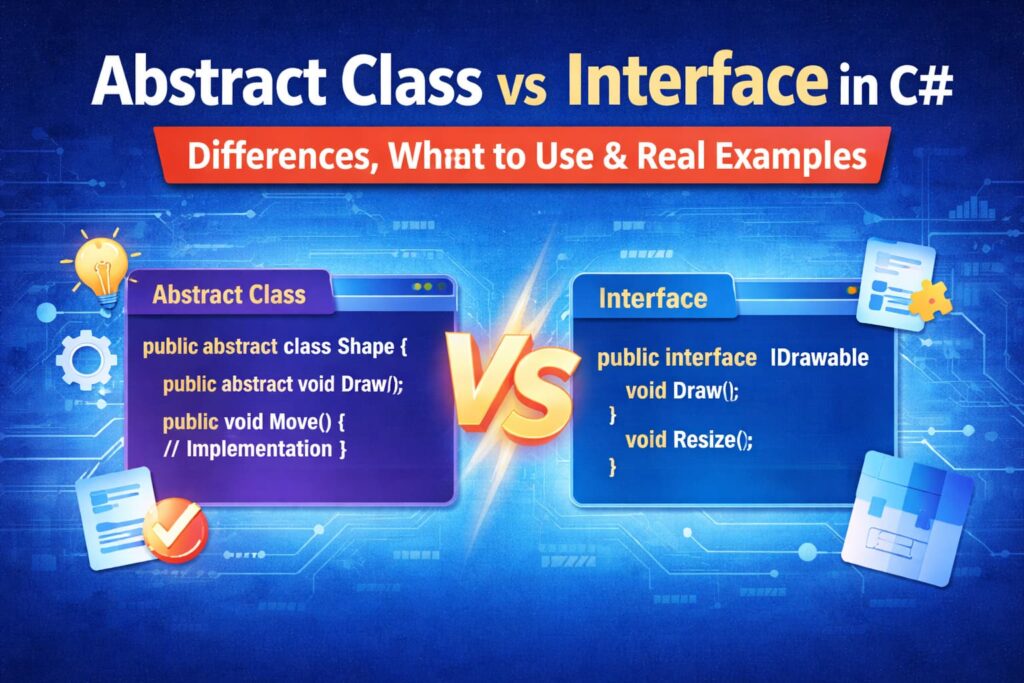
Abstract class vs interface in C# comparison showing differences and real examples

Abstract Class vs Interface in C#: Differences, When to Use & Real Examples

When I first started learning C#, I often came across the topic “abstract class vs interface in C#”, and honestly, it was confusing at first. Both concepts seem similar because they are used to design and structure code. But when you start building real applications, you realize they are used in different situations and solve

Abstract Class vs Interface in C#: Differences, When to Use & Real Examples Read More »

Repository Pattern in ASP.NET Core Web API example 2026 guide

Repository Pattern in ASP.NET Core Web API with Example – 2026 Guide

When building scalable applications using ASP.NET Core Web API, managing data access logic efficiently becomes very important. If you directly use Entity Framework Core inside controllers, your code can become tightly coupled, harder to maintain, and difficult to test. This is where the Repository Pattern comes in. It provides a clean way to separate data

Repository Pattern in ASP.NET Core Web API with Example – 2026 Guide Read More »

Dependency Injection in ASP.NET Core explained with real examples using services and C# illustration

Dependency Injection in ASP.NET Core: Explained with Real Examples (2026 Guide)

When people start building applications in ASP.NET Core, one concept that quickly appears everywhere is Dependency Injection (DI). If you are new, you can first understand What is Web API in .NET and also learn the Difference between .NET Framework, .NET Core & .NET 8. At first, it may sound like a complex or advanced

Dependency Injection in ASP.NET Core: Explained with Real Examples (2026 Guide) Read More »

Azure for .NET Developers – Beginner Guide to Deploy ASP.NET Core Apps in Azure (2026)

Azure for .NET Developers: Complete Beginner Guide to Deploy ASP.NET Core Apps (2026)

When you start learning ASP.NET Core and building Web APIs, everything works perfectly on your local machine. But sooner or later, you probably face the same question every developer hits how do I deploy this application so others can actually use it? Running a project locally is one thing, making it available to real users

Azure for .NET Developers: Complete Beginner Guide to Deploy ASP.NET Core Apps (2026) Read More »